
Shipping
Methanol in maritime transport
Global maritime transport is responsible for around 3% of global greenhouse gas emissions. Decarbonising the shipping sector is crucial for reaching global climate targets.
The International Maritime Organisation (IMO) has set a target of net-zero CO₂ emissions from shipping by or around 2050. An ambitious goal that requires technological changes in the industry, including the use of cleaner maritime fuels and technologies.
Among the alternative clean fuels being explored, methanol has emerged as one of the most commercially viable options
What began in the chemical tanker sector, where operators already familiar with handling methanol as cargo, has now expanded across nearly every vessel category.
The growth of methanol in shipping is also driving investment across the wider maritime value chain, including engine manufacturing, fuel supply, bunkering infrastructure, and port development. Major shipowners, ports, and energy companies are already investing in methanol-ready operations and supply chains.
Adoption is also expanding beyond ocean-going vessels. Methanol is being used in inland and coastal shipping in China and India, where methanol-powered vessels are already operating in commercial service.

vessels in operation
vessels on order
vessel categories adopting methanol
ports offering or preparing to offer methanol bunkering
Why shipping is choosing methanol
Infrastructure compatibility
Methanol is liquid at ambient temperature, making it easier to store, transport, and distribute by ship, pipeline, truck, and rail than fuels that require cryogenic storage or high-pressure systems. In many cases, existing port and vessel infrastructure can be adapted for methanol use.
Regulatory alignment
Bio-methanol and renewable methanol are recognised within the IMO’s lifecycle emissions framework. They also comply with the European Union’s Emissions Trading System and FuelEU Maritime requirements.
Certification
International certification systems, including the International Sustainability and Carbon Certification (ISCC) and equivalent schemes, already provide established methods for verifying emissions across different methanol production pathways. These frameworks support transparency and traceability across the fuel supply chain.
Proven technology
Methanol engine technology is well established, with more than a decade of operational experience at sea. Modern dual-fuel engines can operate on both conventional fuel and methanol, giving shipowners greater operational flexibility while supporting a gradual transition toward low-carbon fuels as supply grows.
Bunkering availability
Methanol bunkering is already available at more than 40 ports across the Americas, Asia, and Europe, including major hubs such as Gothenburg, Rotterdam, and Singapore. Compared to other cleaner fuels, the methanol bunkering infrastructure is significantly more advanced today, with routine commercial operations already taking place.
Environmental gains
Methanol produces no sulfur oxide emissions (SOx), reduces nitrogen oxides (NOx) by up to 60%, and eliminates particulate matter. When produced from renewable sources, methanol can also cut greenhouse gas emissions (CO₂) by more than 90% compared to conventional marine fuels. It’s also biodegradable and water soluble, significantly reducing risks and impact on ecosystems in case of spills.
Retrofit potential
In addition to newbuild vessels, existing ships can also be retrofitted to run on methanol. This gives shipowners another practical way to reduce emissions while extending the life of existing vessels. Compared to some alternative fuels, methanol retrofits require lower capital investment and fewer onboard modifications.
Safety
Methanol is a stable and safe fuel option for marine operations. Its physical properties make it suitable for storage and handling, with well-established safety protocols that mirror those of traditional fuels like diesel.
Methanol engine and vessels technology
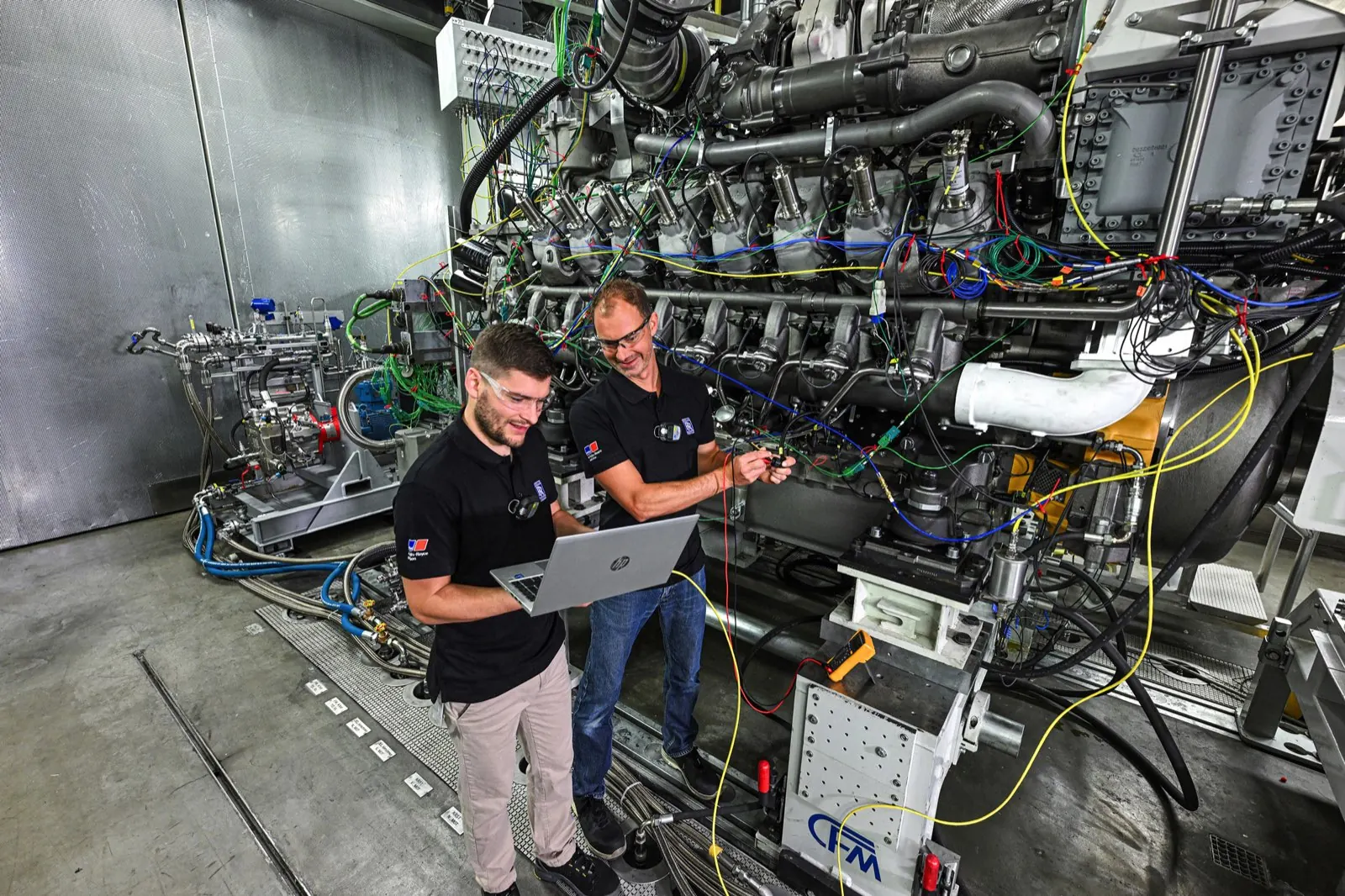
Methanol engine technology is already commercially available and in operation across multiple vessel segments. Both two-stroke and four-stroke methanol engines are on the market today, supplied by major marine engine manufacturers including Everllence, Rolls-Royce Power Systems, and Wärtsilä.
Modern methanol-fueled vessels typically use dual-fuel engines capable of operating on both methanol and conventional marine fuel. When running on methanol, a small quantity of pilot fuel is injected first to initiate combustion before the methanol charge ignites. This dual-fuel capability gives operators flexibility and ensures vessels can continue operating even if methanol is not yet available for bunkering at a specific port.
Methanol vessels are also designed with multiple safety systems and operational safeguards. Methanol is stored in dedicated tanks equipped with nitrogen blanketing systems to reduce fire risk, while fuel supply systems in enclosed spaces use double-walled piping and continuous leak detection. Ventilation and emergency shutdown systems are also integrated to respond automatically if methanol vapors are detected above safe levels.